
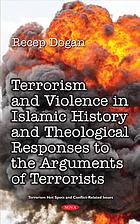
Terrorism and Violence in Islamic History and Theological Responses to the Arguments of Terrorists
-
 Writen byRecep Doğan
 - PublisherNova Science Publishers
- Year2018
This book examines the historical emergence of radical terrorist groups within Muslim-majority societies from the mid-7th century CE to the modern era, analyzing how extremists have misinterpreted the Qur’an and Prophetic Traditions to justify violence. Recep Doğan provides detailed theological rebuttals to such misappropriations, emphasizing the sanctity of human life and the prohibition against harming innocent individuals regardless of religion, ethnicity, or culture. Through extensive references to primary Islamic sources, the work highlights the distinction between religious teachings and the actions of violent extremists, arguing against labeling terrorism as inherently “Islamic.” The book situates these theological arguments within a historical framework of Islamic fundamentalism and the evolution of extremist movements. Its contemporary relevance is significant, particularly in combating Islamophobic narratives, supporting counter-radicalization programs, and informing both policymakers and religious communities on strategies to delegitimize terrorist ideology while reinforcing ethical interpretations of faith. The work provides practical guidance for community engagement, theological education, and public awareness initiatives aimed at preventing religiously framed violence.The book’s major strength lies in its rigorous engagement with Islamic primary texts and its careful distinction between religion and extremist interpretation, providing a scholarly, ethical, and historically grounded counter-narrative to terrorism. It combines historical analysis with theological reasoning, offering insights valuable for scholars of religion, terrorism studies, and peacebuilding. A limitation is its dense focus on Islamic sources, which may reduce accessibility for non-specialist audiences, and it primarily addresses religious-ideological arguments rather than operational or policy-focused counterterrorism strategies. Nevertheless, its originality and depth make it a significant contribution to scholarship on religion and political violence.A highly valuable and original work that effectively bridges Islamic theological analysis with the study of terrorism, offering both historical context and practical insights for preventing religiously framed violence. It is recommended for repositories focusing on terrorism, extremism, religion, and conflict studies.