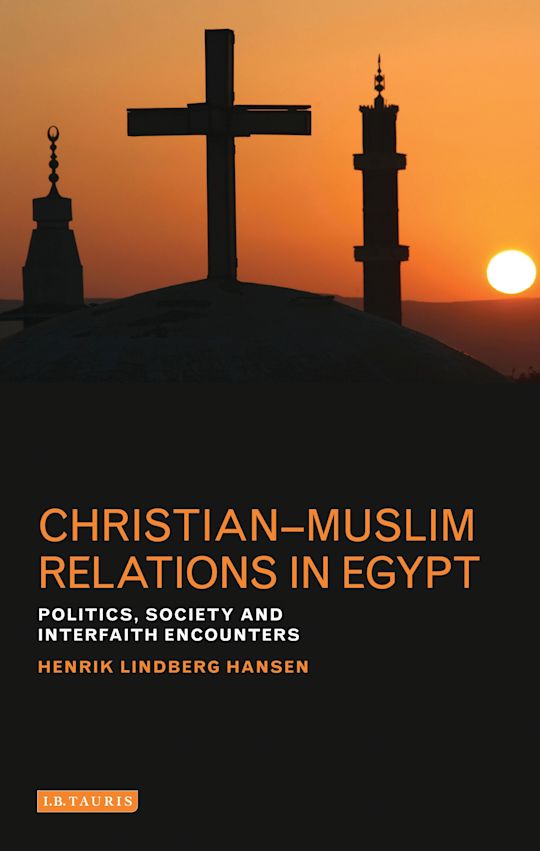
Christian-Muslim Relations in Egypt:
-
 Writen byHansen, Henrik Lindberg
 - PublisherI.B.Tauris
- Year2015
The book examines Christian-Muslim relations in Egypt, emphasizing both political and social dimensions. Hansen situates religious dialogue within broader societal and institutional contexts, analyzing how religious groups interact and respond to social and political challenges. Key aspects include: Christian Minority in Egypt Egypt has the largest Christian community in the Middle East, comprising approximately 6–10% of the population. The book explores the historical and contemporary position of Christians in Egyptian society. Institutional Analysis Major institutions: Al-Azhar University – influential Sunni Islamic institution Muslim Brotherhood – political and social Islamic organization Coptic Orthodox Church – representing the majority of Egyptian Christians Smaller initiatives: CEOSS (Coptic Evangelical Organization for Social Services), Anglican & Catholic Churches, youth organizations, and grassroots dialogue initiatives. Interfaith Dialogue Hansen examines how interfaith dialogue reflects broader societal relationships, power dynamics, and negotiation of religious coexistence. Dialogue is not limited to formal institutional exchanges but extends to youth, community, and civil society initiatives. Violence and Conflict The book also analyzes episodes of violence against Christian communities, contextualizing them within societal, political, and religious frameworks. Explores how dialogue initiatives emerge in response to tensions and how they influence social cohesion. Methodology Combines case studies, institutional analysis, and field observations to understand the interplay of religion, politics, and society.