

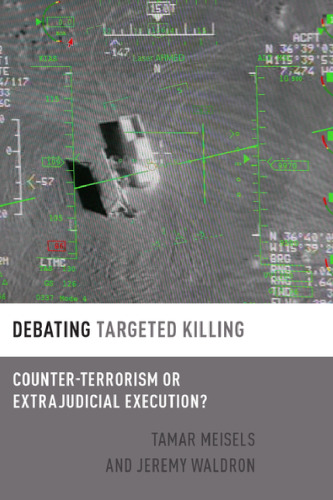
Debating Targeted Killing:
-
 Writen byTamar Meisels, Jeremy Waldron
 - PublisherOxford University Press
- Year2020
Debating Targeted Killing examines the moral, legal, and political controversies surrounding the use of targeted killing as a counterterrorism strategy, particularly by states such as Israel and the United States. The book is structured as a rigorous debate between Tamar Meisels and Jeremy Waldron, presenting opposing perspectives on whether targeted killing constitutes legitimate counterterrorism or an unethical extrajudicial act. The introduction provides historical context, defining targeted killing and analyzing its application in contemporary conflicts. Subsequent chapters delve into ethical reasoning, legal frameworks, and practical implications, addressing questions such as civilian risk, proportionality, state responsibility, and accountability. The text balances theoretical analysis with real-world examples, providing readers with nuanced insights into the justification and criticism of state-sanctioned lethal operations.In the modern era, where drone warfare, counterterrorism operations, and state security measures dominate international discourse, this book is highly relevant for policymakers, academics, and security professionals. It provides a framework for understanding the ethical limits of state action, balancing national security against human rights, and considering legal obligations in armed conflict. The book’s insights can inform public debate and educational programs on ethics in counterterrorism, supporting community engagement initiatives that promote informed discussion on security policies. Additionally, its analysis can guide rehabilitation and deradicalization programs by highlighting ethical distinctions between state-sanctioned actions and extremist violence, fostering critical thinking and moral reasoning in at-risk populations.Debating Targeted Killing is a significant scholarly contribution that rigorously examines one of the most pressing ethical dilemmas of modern counterterrorism. By presenting competing viewpoints, it encourages critical analysis, nuanced understanding, and informed policy discourse, making it an essential resource for academics, legal scholars, and practitioners in security and ethics.


