
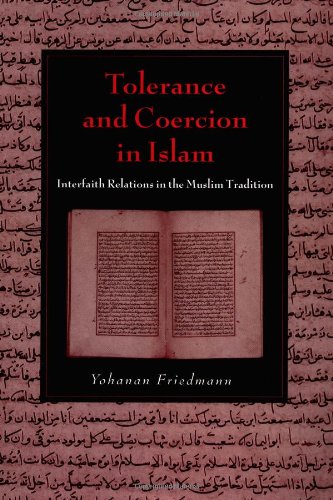
Tolerance and Coercion in Islam:
-
 Writen byYohanan Friedmann
 - PublisherCambridge University Press
- Year2003 (print)
Yohanan Friedmann explores the complex and evolving relationship between Muslims and religious Others throughout Islamic history. Drawing on Qurʾanic exegesis, Hadith, classical jurisprudence, and the four Sunni schools of law, this study analyses how the concept of "Islam is exalted above all religions" impacted legal and theological responses to non-Muslims. The book addresses key issues including religious diversity, unbelievers, apostasy, and interfaith marriages. While the Qurʾanic verse “There is no compulsion in religion” appears to advocate freedom of belief, the author demonstrates how Muslim jurists interpreted and constrained it, and how norm setting in Muslim-ruled societies shaped tolerance and coercion.This work is highly relevant for the GRACE Repository’s focus on peace, interfaith understanding, counter-violent extremism, and community rehabilitation. It provides a rigorous historical and legal framework for understanding how one major tradition (Islam) has dealt with religious diversity, internal identity, and external Others — themes central to fostering respectful inter-religious relations and mitigating conflict. By unraveling both tolerant and coercive threads in Islamic tradition, it aids in developing critical insights for credentialing interfaith education, peacebuilding curricula, and policy frameworks in plural societies.