
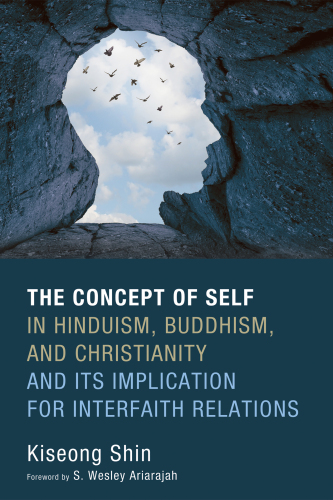
The Concept of Self in Hinduism, Buddhism, and Christianity and Its Implication for Interfaith Relations
-
 Writen byKiseong Shin
 - PublisherWipf and Stock
- Year2017
This work presents the first comprehensive comparative study of how the concept of “self” is understood within Hinduism, Buddhism, and Christianity. Kiseong Shin explores how each tradition conceptualizes human identity, imperfection, and the path to liberation or salvation. While Hinduism and Buddhism locate the problem in ignorance and attachment, Christianity attributes it to sin and alienation from God. Shin highlights both doctrinal divergence and underlying unity—showing that the question of selfhood is foundational for interfaith dialogue, moral development, and human reconciliation.Establishes a philosophical and theological bridge among Eastern and Western faiths, emphasizing shared ethical aspirations despite metaphysical differences. Argues that understanding “self” and “no-self” concepts is vital for constructive interfaith engagement in pluralistic societies. Suggests that interreligious harmony can be advanced through deeper insight into human ontology—recognizing the self as a site of both division and unity. Serves as an intellectual foundation for peacebuilding through religious empathy and mutual comprehension.This book provides a profound comparative analysis of how the concept of “self” and “no-self” functions within Hinduism, Buddhism, and Christianity. Despite their doctrinal diversity, these three major religions share a concern with the human predicament and the quest for liberation or salvation. Kiseong Shin explores how Hinduism and Buddhism perceive human nature as inherently perfectible, while Christianity emphasizes the limitations of human beings and their dependence on divine grace. The author investigates key concepts such as moksha, nirvana, anatta, sin, and salvation—uncovering both the divergences and convergences that shape each religion’s understanding of the human self. By analyzing these perspectives, Shin argues that a comparative understanding of selfhood can serve as a foundational tool for interfaith harmony, philosophical dialogue, and peaceful coexistence in today’s multicultural and multireligious world.The author’s comparative methodology advances intellectual empathy between Eastern and Western traditions by addressing a universal question: What is the nature of the self, and how does it relate to ultimate reality? The study promotes interreligious dialogue by: Encouraging mutual respect through comparative theological understanding. Addressing existential and spiritual commonalities among diverse faith traditions. Providing an academic framework for rehabilitation of misconceptions between religious communities. Serving as a philosophical foundation for peace education and the development of tolerant worldviews. Thus, the book aligns with GRACE’s mission to promote global peace, interfaith understanding, and coexistence through academic discourse.