
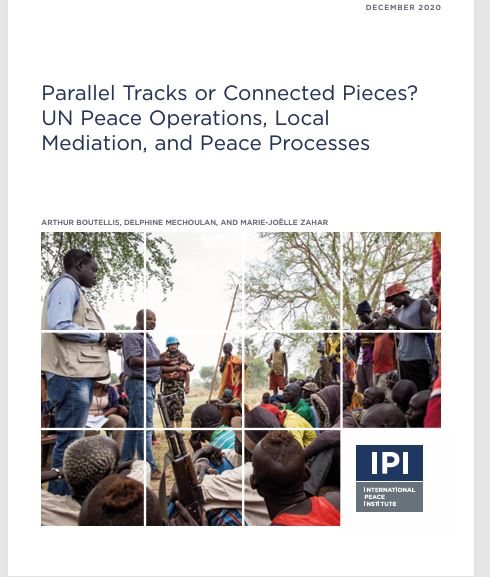
Parallel Tracks or Connected Pieces?
-
 Writen byArthur Boutellis, Delphine Mechoulan, Marie-Joëlle Zahar
 - PublisherInternational Peace Institute (IPI)
- YearDecember 2020
This policy brief examines the role of local mediation within the broader context of UN peace operations. It highlights the limitations of traditional track-1 mediation processes, which often fail to address the fragmented nature of contemporary conflicts and the needs of local communities. The authors argue that local mediation efforts, such as intra- or inter-community dialogues and local ceasefires, are crucial for de-escalating conflicts and building sustainable peace. The brief provides a typology of local mediation initiatives and discusses the complexities of involving various actors, including local communities, civil society, and business entities. It emphasizes the need for UN missions to assess strategically when and how to engage in local mediation, ensuring that their involvement complements national peace processes and is tailored to the specific context of each situation.In an era marked by protracted and multifaceted conflicts, the traditional state-centric approach to peacebuilding has proven insufficient. This brief underscores the importance of local mediation as a means to address the root causes of conflicts at the community level. It advocates for a nuanced understanding of local dynamics and stresses the necessity for UN peace operations to engage with local actors to foster inclusive and sustainable peace. Community engagement mechanisms proposed include supporting local peace initiatives, facilitating dialogues between conflicting parties, and empowering local leaders and organizations to take ownership of the peace process.Parallel Tracks or Connected Pieces? offers a timely and insightful analysis of the intersection between UN peace operations and local mediation efforts. It provides practical recommendations for enhancing the effectiveness of peacebuilding initiatives by emphasizing the importance of local context and actors. The brief is a valuable resource for policymakers, practitioners, and scholars interested in understanding and improving the dynamics of peace processes.