
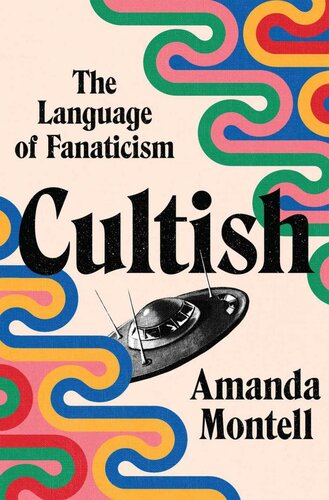
Cultish: The Language of Fanaticism
-
 Writen byAmanda Montell
 - Publisher
- Year2021
Cultish: The Language of Fanaticism is a sociolinguistic investigation into how language plays a central role in the creation and maintenance of cult-like ideologies and communities. Amanda Montell explores a spectrum of groups—from dangerous religious cults like Jonestown and Heaven’s Gate to more mainstream examples such as fitness brands, MLMs, startup cultures, and influencer circles—arguing that the “cultish” is not just a fringe phenomenon but a linguistic reality embedded in everyday life. The book demonstrates how language is systematically used to foster group identity, establish authority, and create boundaries between insiders and outsiders. Drawing from contemporary examples and historical context, Montell illustrates how the linguistic strategies used in cults are mirrored in seemingly benign institutions, making her case that “cultish” language affects us all—often without our awareness.In the digital age, where information ecosystems are fragmented and ideological bubbles thrive, Cultish is profoundly relevant. Online radicalization, influencer-driven echo chambers, and algorithm-fueled identity formation often rely on simplified narratives, jargon, and emotionally loaded language—exactly the mechanisms explored in this book. The work resonates with community engagement and resilience-building efforts by highlighting how communities can become vulnerable to manipulation through everyday speech. It also opens the door for educational interventions, media literacy workshops, and de-radicalization programs by demystifying the linguistic tricks that cultivate loyalty and belief in polarizing ideologies. Amanda Montell’s Cultish presents a compelling, accessible, and highly insightful exploration of how language can serve as a subtle but powerful tool of radicalization and control. It stands out for its interdisciplinary approach, blending linguistics, psychology, and cultural critique, making it highly appropriate for academic and non-academic audiences alike. Despite its journalistic tone, the book’s content is suitable for repositories aiming to promote understanding of fanaticism, identity manipulation, and extremist influence, especially in modern, non-violent forms.