
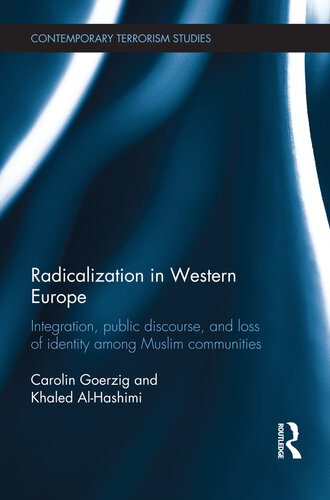
Radicalization in Western Europe:
-
 Writen byCarolin Görzig, Khaled Al-Hashimi
 - PublisherRoutledge
- YearSeptember 15, 2014
Carolin Görzig and Khaled Al-Hashimi's Radicalization in Western Europe investigates the paradox wherein increased integration efforts have coincided with heightened radicalization among Muslim populations in Western Europe. Through extensive field research in the UK, the Netherlands, Germany, and France, the authors explore why second and third-generation Muslims exhibit more radical tendencies than their predecessors, why home-grown terrorism has surged, and why certain European countries experience more radicalization than others.The authors argue that identity loss resulting from integration processes and public discourse contributes significantly to radicalization. They contend that as Muslims integrate and identify with European societies, they may experience a loss of individuality, leading to a search for alternative identities, sometimes found in radical ideologies. This perspective challenges individualist and structural approaches, offering a nuanced understanding of radicalization dynamics. In today's context, where integration and radicalization remain pressing issues, this book provides valuable insights into the unintended consequences of integration policies and public discourse. The authors highlight the importance of addressing identity loss and fostering inclusive narratives to mitigate radicalization risks.For community engagement, the book suggests mechanisms such as:Inclusive Policy Development: Crafting integration policies that preserve individual identities while promoting social cohesion.Community Dialogues: Facilitating open discussions between Muslim communities and broader society to address grievances and misconceptions.hese strategies aim to create an environment where integration does not equate to identity loss, thereby reducing the appeal of radical ideologies