
Terrorist Minds:
-
 Writen bySagit Yehoshua
 - PublisherWorld Scientific
- Year 2020
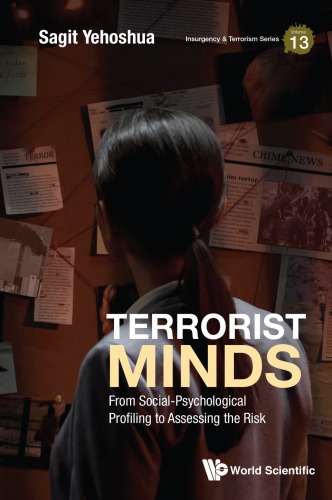
Terrorist Minds: From Social-Psychological Profiling to Assessing the Risk by Sagit Yehoshua explores the complex process of profiling terrorists and assessing the risks associated with them. The book emphasizes the importance of understanding the psychological makeup of individuals involved in terrorism by studying imprisoned leaders of terrorist organizations. Yehoshua collaborates with the Intelligence Department of the Israeli Prison Service, using qualitative interviews to build social-psychological profiles of these individuals. The aim is to create tools that aid in better observation and management of the risks posed by these individuals, with a focus on understanding their social, professional, and personal lives. The book also covers the practical application of risk assessment tools based on these profiles, offering insights for professionals in the field of counter-terrorism and intelligence. Relevance with the Current Era along with Community Engagement Mechanism: This book remains highly relevant in the modern context of counter-terrorism strategies. With the increasing focus on understanding terrorist behavior from a psychological standpoint, it contributes significantly to efforts in preventing radicalization and managing incarcerated terrorist leaders. By offering concrete, empirically backed risk assessment tools, it assists intelligence agencies and security forces in more effectively engaging with potential threats. The community engagement mechanism, in this context, extends to law enforcement, security agencies, and rehabilitation professionals who need to better understand and mitigate risks from individuals involved in terrorism.Terrorist Minds provides an insightful exploration into the psychological profiling of terrorists, particularly in prison settings. The collaboration with the Israeli Prison Service ensures the book is grounded in real-world data, enhancing its practical applicability. Yehoshua’s approach to building risk assessment tools through psychological analysis is a valuable contribution to the field of counter-terrorism. This book will be an essential read for those involved in intelligence, counter-terrorism operations, and understanding radicalization from a psychological perspective