

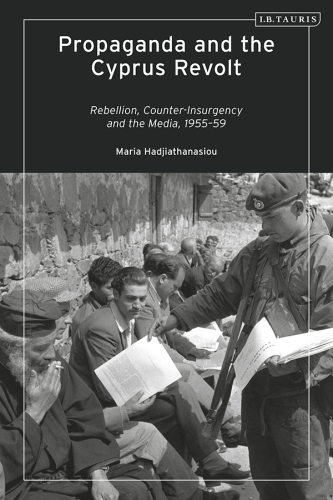
Propaganda and the Cyprus Revolt:
-
 Writen byMaria Hadjiathanasiou
 - PublisherBloomsbury Academic
- Year2020
Maria Hadjiathanasiou’s Propaganda and the Cyprus Revolt delves into the role of media and propaganda during the Cyprus insurgency (1955-59). The book examines how both the Greek Cypriot rebels (EOKA) and the British colonial forces utilized propaganda as a central tool in their conflict, influencing public opinion and mobilizing support for their respective causes.Hadjiathanasiou discusses the strategic use of media by both sides to frame their narratives, control perceptions, and secure international backing. The book also explores the complex interaction between rebellion and counter-insurgency, showing how the media acted not just as a tool for communication, but as a battleground for ideological and political influence. By analyzing this media landscape, Hadjiathanasiou sheds light on the ways in which propaganda influenced the outcome of the Cyprus revolt and shaped the larger historical context of anti-colonial resistance. Relevance with the Current Era along with Community Engagement Mechanism: This book is highly relevant for contemporary discussions on the role of media in conflict, rebellion, and counter-insurgency. As media continues to play a pivotal role in modern conflicts, the historical analysis provided in Propaganda and the Cyprus Revolt can inform current debates on the power of media in shaping public opinion, legitimizing violence, and influencing political outcomes in contemporary insurgencies and counter-insurgencies. From a community engagement perspective, understanding the historical use of media in conflict, as demonstrated in the Cyprus case, provides valuable lessons for current peacebuilding efforts. This can aid in designing more effective communication strategies that foster understanding, bridge divides, and contribute to reconciliation in post-conflict societies. Propaganda and the Cyprus Revolt is an insightful and meticulously researched examination of the role media and propaganda played in the Cyprus insurgency. Hadjiathanasiou’s work contributes to the broader understanding of the strategic use of media in insurgency and counter-insurgency, making it an essential resource for scholars of modern history, political communication, and conflict studies. Target Audience: This book will appeal to students and researchers in history, media studies, political communication, insurgency studies, and post-colonial studies. It is also relevant for policymakers and practitioners working in conflict resolution and peacebuilding.


