
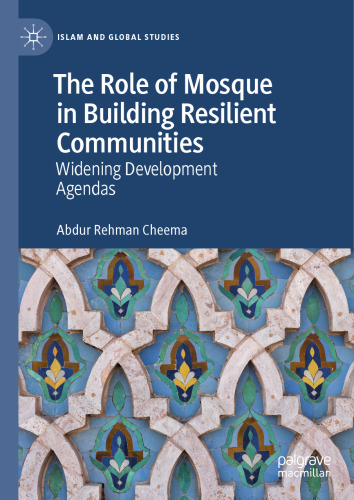
The Role of Mosque in Building Resilient Communities:
-
 Writen byAbdur Rehman Cheema
 - PublisherPalgrave Macmillan
- Year December 5, 2021
This book examines the pivotal role mosques play in fostering resilient communities, particularly in the context of disasters. Focusing on the aftermath of the 2005 earthquake in Pakistan, it highlights how mosques functioned as physical, spiritual, and social hubs, facilitating disaster risk reduction and management. The author emphasizes the potential of mosques to enhance community preparedness and response, not only in natural disasters but also during health crises like the COVID-19 pandemic. By exploring the broader role of religion in development, the book advocates for greater engagement with community-based religious institutions in disaster management and community resilience efforts. In today's world, where communities face multifaceted challenges ranging from natural disasters to pandemics, the role of local institutions in fostering resilience is paramount. This book underscores how mosques, as community-based religious institutions, can effectively mobilize resources, disseminate crucial information, and provide spiritual solace during crises. By integrating religious networks into disaster preparedness and relief efforts, the book offers insights into enhancing community engagement mechanisms, ensuring timely and culturally sensitive responses to emergencies. "The Role of Mosque in Building Resilient Communities" provides a comprehensive analysis of the intersection between religion and disaster management. Through empirical evidence and case studies, it showcases the untapped potential of mosques in promoting community resilience. The author's dual perspective as a scholar and practitioner enriches the narrative, making it both informative and practical.