
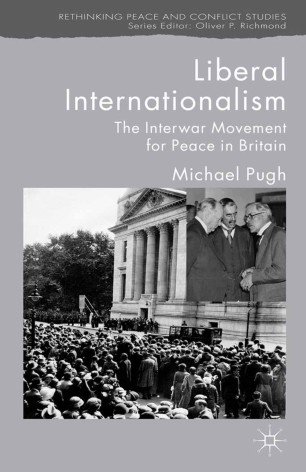
Liberal Internationalism:
-
 Writen byMichael C. Pugh
 - PublisherPalgrave Macmillan
- Year2012
Michael C. Pugh’s Liberal Internationalism: The Interwar Movement for Peace in Britain explores the rise of liberal internationalist thought and its role in shaping Britain’s peace movement during the interwar years. It provides a critical analysis of how intellectuals, policymakers, and activists sought to promote peace, disarmament, and international cooperation following World War I. The book examines key thematic debates within interwar peace activism, including: • Governance and Ideology – The clash between liberal internationalism and realist approaches to security. • Education and Peace Advocacy – How democratic ideals were promoted through public engagement and policy reforms. • Disarmament and Security Dilemmas – The tension between peaceful disarmament and the growing militarization of Europe. • The Role of the League of Nations – The challenges of collective security and efforts to strengthen international governance. • Imperialism and Economic Security – The role of British imperial policy in shaping international economic stability. • Resistance and Pacifism – The influence of nonviolent movements and public opposition to war. By exploring historical case studies and political movements, Pugh provides insights into why liberal internationalism ultimately struggled to prevent the outbreak of World War II. His analysis is both historical and contemporary, offering lessons for modern peace efforts and international diplomacy. Relevance to Current Global Issues This book offers valuable lessons for understanding modern peacebuilding, conflict resolution, and international diplomacy, particularly in contexts like: • The United Nations and global governance, where lessons from the League of Nations remain relevant. • Post-war reconstruction efforts, such as in Libya, Syria, and Afghanistan. • Modern disarmament initiatives, including nuclear non-proliferation and arms control treaties. • The role of economic sanctions in global security, relevant to current geopolitical conflicts This book is an essential historical reference for understanding peace movements, international diplomacy, and the challenges of disarmament especially for those researching historical perspectives on peace advocacy, international governance, and the evolution of liberal internationalist thought.