
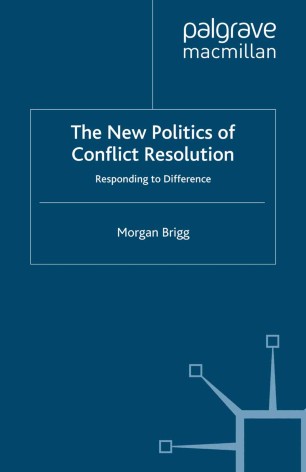
The New Politics of Conflict Resolution:
-
 Writen byMorgan Brigg
 - PublisherPalgrave Macmillan
- Year2008
Morgan Brigg’s The New Politics of Conflict Resolution challenges traditional Western-centric approaches to conflict resolution by emphasizing the role of difference, identity, and postcolonial perspectives. The book critically examines how power dynamics influence peace processes, arguing that conventional conflict resolution methods often overlook cultural and historical contexts. Brigg advocates for more inclusive, context-sensitive approaches that recognize local traditions, indigenous peace practices, and alternative governance models. Through theoretical analysis and case studies, the book highlights the limitations of universalist conflict resolution frameworks and promotes adaptive, responsive methods that align with diverse sociopolitical realities. In an era of decolonization discourse and identity politics, this book is particularly relevant for scholars and practitioners engaged in post-conflict peacebuilding, mediation, and governance. As contemporary peace processes increasingly emphasize local ownership, cultural sensitivity, and power imbalances, Brigg’s insights remain crucial for rethinking peace efforts in diverse conflict settings, from Africa to the Middle East and beyond. This book is a significant contribution to peace and conflict studies, providing a fresh perspective on mediation, negotiation, and governance. It is particularly valuable for researchers, policymakers, and mediators who seek alternative frameworks beyond traditional Western conflict resolution models.